



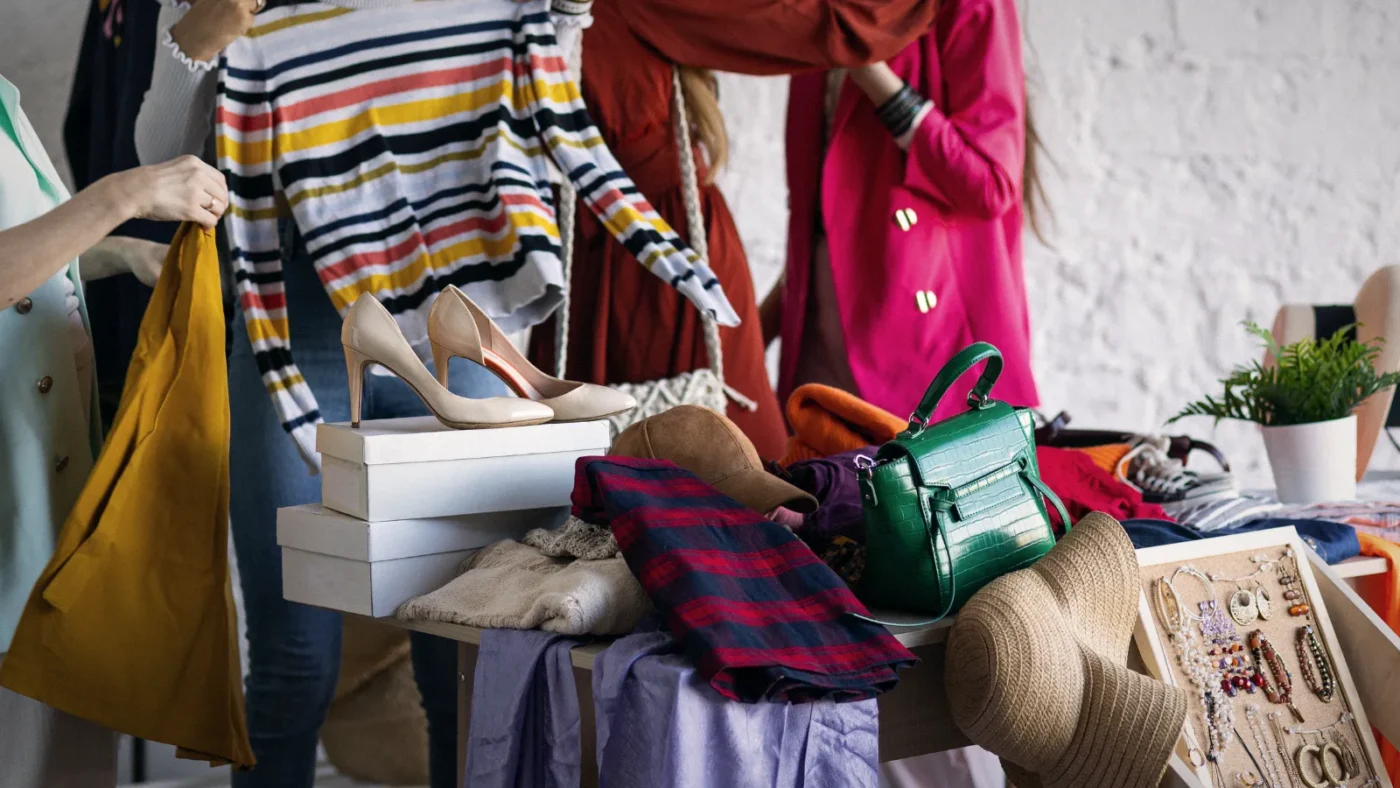
In our wardrobes there are clothes we have not worn for years. In our neighbours’ too, probably. The swap party, the party of exchange, starts from this simple observation: instead of buying new, we swap what we already have.
How it works
Everyone brings a few clean garments in good condition and receives in exchange “tokens” or simply the right to choose as many garments from those brought by others. What is left over can be donated to an association or a social enterprise.
How to organise one
- Choose the place: a home, a school, a library, a building courtyard.
- Set a few rules: washed garments, no obvious damage, a maximum number of pieces per person.
- Set up by category: women, men, children, accessories. A mirror and a corner to try things on make a difference.
- Think about the aftermath: decide beforehand where whatever does not find a new owner will go.
Why it works
Swapping saves money, reduces waste and creates relationships: people chat, give advice, discover that a forgotten garment can become someone else’s favourite. In Galleria Umberto I in Turin too, projects such as R3WEAR’s Open Collection bring this idea into the life of a neighbourhood.
Learn more
Why we are talking about it
Sign Festival is promoted by Associazione Culturale Sign Festival ODV ETS and is recognised by the UN for its contents related to the2030 Agenda. For over ten years it has brought together creative reuse, sustainable fashion e design, reuse markets and circular economy, social inclusion: the environmental and social themes that today we also call ESG, translated into competitions, workshops, exhibitions and meetings open to all.
Read also: Summer upcycling: five ideas to give clothes new life · Back to school with second-hand: books, backpacks and smocks that have already done a year · The Festival · The Independent Style competition · Get involved
