


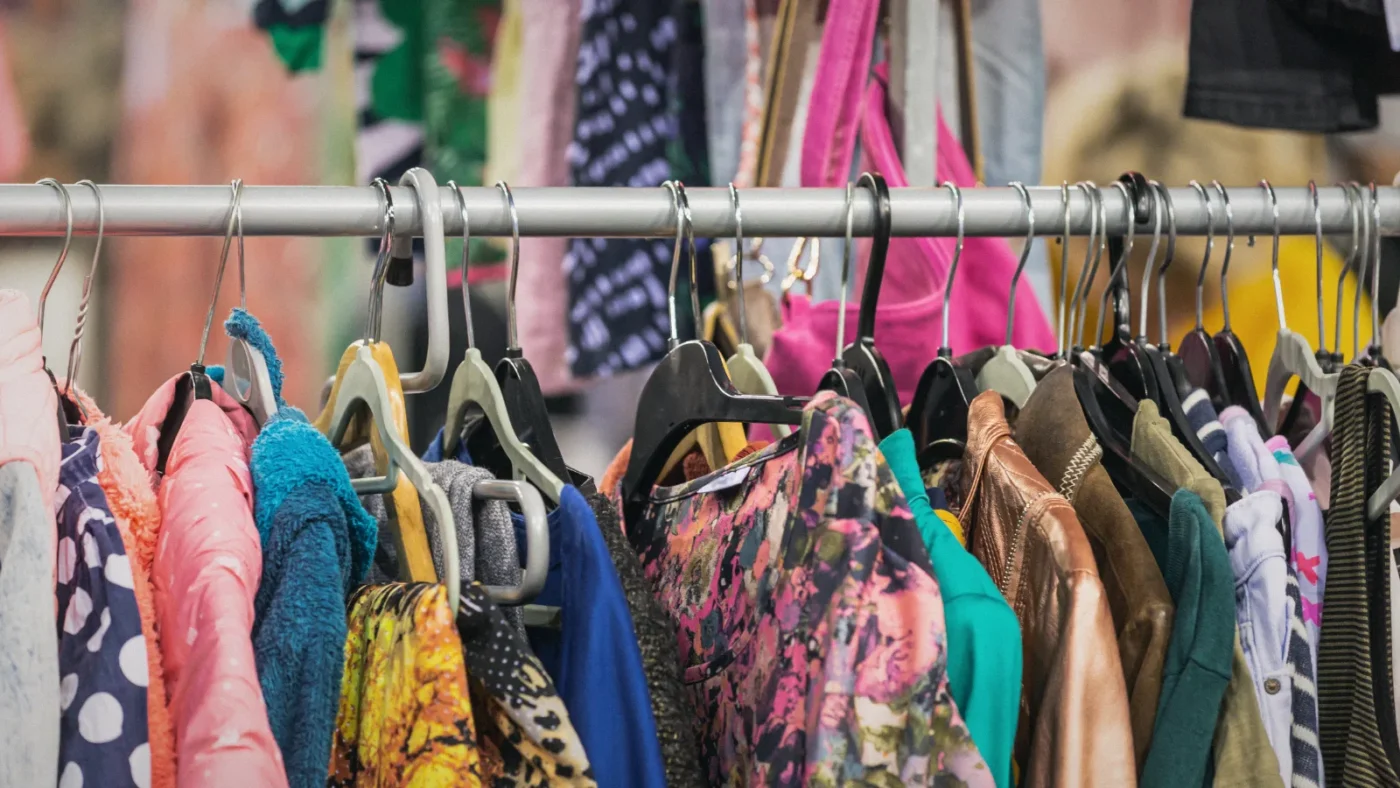
Vintage is the most fascinating way to dress sustainably, but not everything old is automatically good quality. Here is what to look at before buying.
1. The label
Composition, country of production, washing instructions: they say a lot about the era and the material. Natural fibres such as wool, cotton, linen and silk age better than many synthetics.
2. The fabric
Touch it and look at it against the light: a dense, even weave is a sign of quality. Watch out for shiny or thinned areas on elbows, crotch and collars.
3. The seams
Turn the garment inside out. Regular seams, generous allowances and neat finishes indicate good construction and also allow you to alter the size.
4. Fastenings and details
Metal zips, hand-sewn buttons, intact linings: these are details that make a difference and that, if missing, can be replaced.
5. Stains and odours
Many stains come out, some do not. Ask the seller, who often knows the history of the piece well.
6. The fit
Yesterday’s sizes do not match today’s: always try on, or bring the measurements of a garment that fits you well.
And if a garment has a small flaw but you really like it, remember that a seamstress or a good mend can give it a long life.
Learn more
Why we are talking about it
Sign Festival is promoted by Associazione Culturale Sign Festival ODV ETS and is recognised by the UN for its contents related to the2030 Agenda. For over ten years it has brought together creative reuse, sustainable fashion e design, reuse markets and circular economy, social inclusion: the environmental and social themes that today we also call ESG, translated into competitions, workshops, exhibitions and meetings open to all.
Read also: The Balon, the market that has kept things moving for almost 170 years · Second-hand markets: why they are good for the city · The Festival · The Independent Style competition · Get involved
