


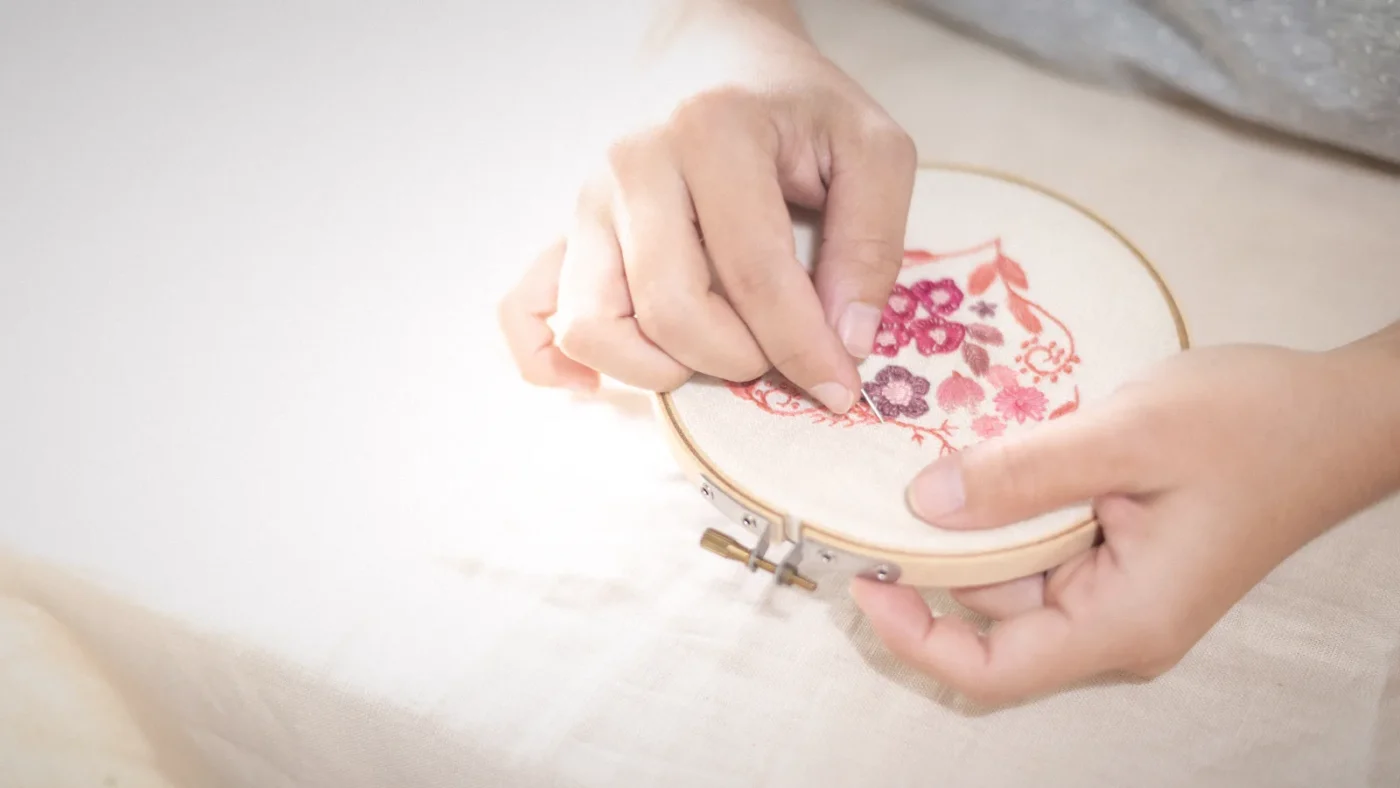
For generations mending was normal: a hole in a sock or a tear in trousers was repaired, not thrown away. Then clothes became cheap and quick to replace, and those gestures almost disappeared. Today they are coming back, and not only out of necessity.
Mending becomes creative
Alongside invisible mending, which tries to hide the damage, there has spread visible mending: colourful patches, decorative stitches, embroidery that turns the tear into a unique detail. It is a way of saying that a garment has a story and that it is worth continuing it. A philosophy close to that of artists such as Sergio Perrero, who saw value in imperfection.
Where to start
- An essential kit: needles of different sizes, cotton and embroidery thread, a thimble, a darning egg or a ball.
- An easy first project: a sock or a sweater with a small hole.
- A workshop: learning live from an expert speeds everything up and is more fun.
In the 2025 edition Sign Festival will dedicate a workshop to embroidery and creative mending, together with HC Lab, Haute Couture Lab of Turin. Because every stitch is a small act of sustainability.
Learn more
Why we are talking about it
Sign Festival is promoted by Associazione Culturale Sign Festival ODV ETS and is recognised by the UN for its contents related to the2030 Agenda. For over ten years it has brought together creative reuse, sustainable fashion e design, reuse markets and circular economy, social inclusion: the environmental and social themes that today we also call ESG, translated into competitions, workshops, exhibitions and meetings open to all.
Read also: Summer upcycling: five ideas to give clothes new life · In praise of imperfection: Sergio Perrero’s method explained in five gestures · The Festival · The Independent Style competition · Get involved
