




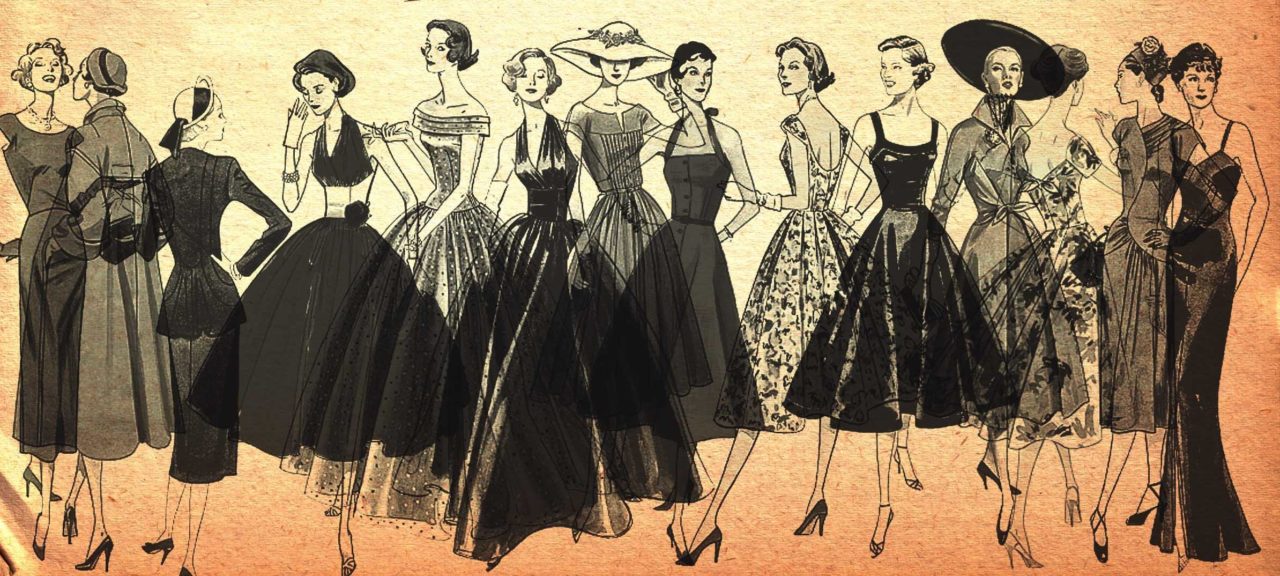
Vintage = Sustainable Fashion
Vintage has always been considered sustainable. Sign Festival is dedicating an article to 1.solo.com, the vintage marketplace.
Talking about vintage clothing by dividing its various styles would be simple, but let’s try to frame the topic more systematically. The danger we’re increasingly recognizing, especially in the economic sphere, where mere financial speculation has supplanted the real economy, is acceleration at all costs.
Many have finally realized the need to reclaim Time, the things that matter. In such challenging times, it’s natural to look back and try to understand where we went wrong, what needs to change to truly improve, to achieve real Progress, with a capital “P,” and not a simplistic acceleration toward irreparable damage.
Perhaps today’s real “revolution” would be to “go back”? We don’t know, we’re happy to leave the discussion of these important issues to those with the expertise. However, we sense a pressing need, and even more hope, for a new long-term vision to emerge soon, a new path that can solve the many problems of a “hyper” society.
Even fashion, historically one of the least eco-friendly sectors, has finally realized the need for change. Not only the new generations of stylists and fashion designers, but also many major brands are placing increasing emphasis on sustainability.
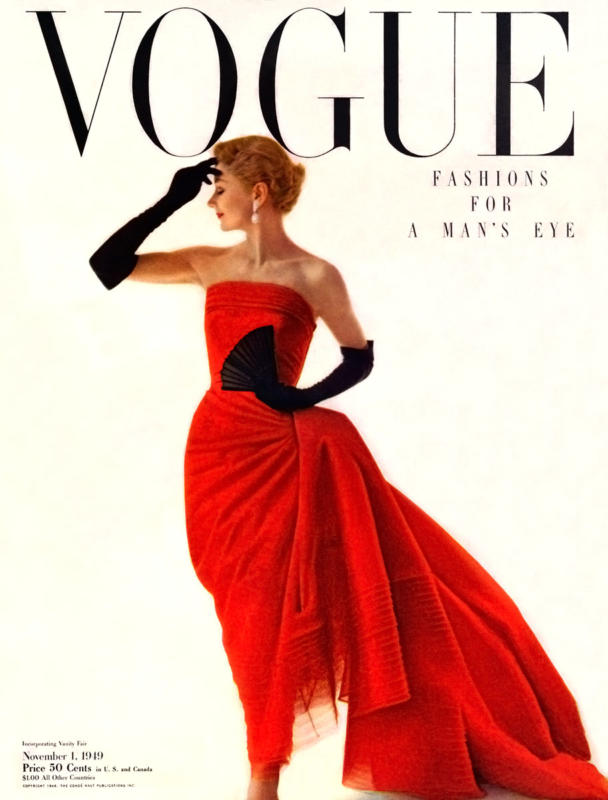
Vogue cover – 1949 – photo by Irving Penn.
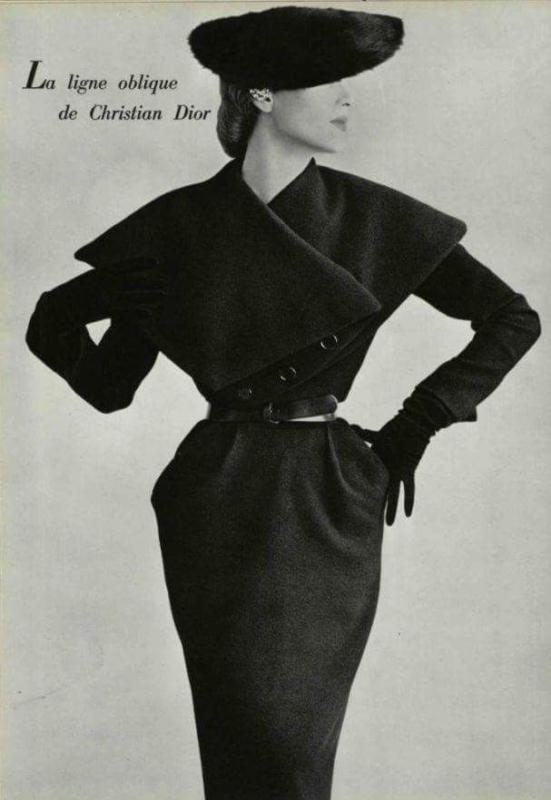
The Oblique Line by Christian Dior – 1950s.
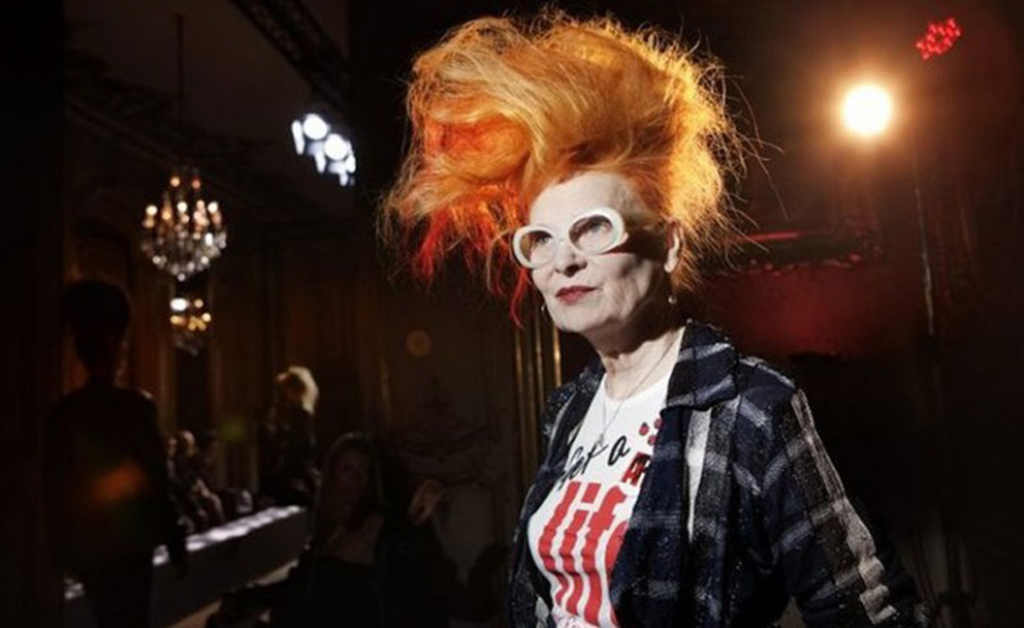
Vivienne Westwood, fashion and punk style icon – 70s-80s.
Getting to the heart of the matter—Vintage Fashion—it must be said that not only do young people feel an exponential desire for a slower pace, more precious fabrics, meticulously executed stitching, and garments cut by expert tailors, but they also aspire to uniqueness. Quoting an old article, which appeared in “unsuspected times” in Donna, the supplement of the Republic, the fact that one of the strongest trends in fashion is “Vintage” It might seem like a contradiction in terms: this is precisely what confirms the importance of form over substance. Therefore, the words of the writer Simon Reynolds are thought-provoking when he says that ” The future is dead. Retro is the future. “and that the ubiquity of the past in contemporary culture is in fact a malaise that potentially undermines everything that is of quality and original.”
Even today, and certainly for years to come, vintage clothing is “cool” and is a circular project that belongs to everyone.
But what is Vintage?
It all began in the U.S.A. after the Second World War. After a long period of suffering, Americans discovered consumerism, relegating second-hand clothing to the poor and those living on the margins of society. The transformation took place in the 1960s with the arrival of the hippies. It was precisely those who followed this “trend” who rediscovered old clothes and made them symbols of an era.
In New York in 1965, the first boutique, called Vintage Chic, opened. It offered a carefully curated selection of historic and antique clothing that was actually just a few decades old. It was incredibly successful. The New York Times, analyzing the situation, wrote: “It is intelligent women who have discovered this world, made of quality, fabrics, and workmanship that the industry of this time cannot match.” These words could have been written just last week!
Many people, however, don’t fully understand the differences between vintage clothing and clothing that can be defined as “retro.” There are significant differences. The difference lies in the historical authenticity of the piece. Retro is something that has the look of being vintage, that gives a nod to vintage.
To be truly vintage, however, a fashion item or accessory must be an original and at least 20 years old (in England, it’s considered vintage only if it’s at least 25 years old). This refers to the age of the item, rather than its style. Therefore, even if a fashion item might have an old style, it doesn’t necessarily mean it’s vintage.
It should also be said that not everything made between 1920 and 2000 (the mid-1990s in England), even if it “technically” is, has vintage appeal. A simple blouse from the same era, for example, doesn’t have the same allure as a 1960s overcoat. Definitions aside, the fact remains that today, used clothing is competing with fast fashion.
Statistics point to a constantly growing market. For example, the used clothing market in the United States in 2018 was worth $24 billion: a staggering sum spent by US citizens at flea markets, thrift shops, and online secondhand clothing stores. The importance of this market becomes even clearer when compared to the growth generated by fast fashion, which, again in 2018, generated a $35 billion market in the US.
Not only is this an excellent result for the used clothing market, but it also confirms a constantly growing trend that positions second-hand fashion as the main (or perhaps only) competitor for fast fashion.
INSIGHTS
The Republic – Fashion: The future is secondhand. Used clothing is competing with fast fashion. .
